
THE CHURCH THROUGH THE DECADES
1975–2025: Fifty Years of RTMC in the Life of Bangalore
In the words of those who were there
Fifty years is a long time to hold fast to the same faith in a city that has changed almost beyond recognition. Bangalore in 1975 and Bangalore in 2025 share a name, a geography, and perhaps the coolness of its December mornings. Almost everything else has been transformed.
Richmond Town Methodist Church has been present through all of it. What follows is a decade-by-decade account of how the church experienced — and responded to — each chapter of that transformation, told as far as possible through the voices of the people who were there.
How This Article Was Built
More than thirty members responded to our questionnaire, identifying the decades to which their clearest memories belong. They described what the church felt like, what was happening in the city, which programmes they were proud of, and what they believe deserves wider recognition. Together, these memories offer something that an institutional history cannot: a picture of RTMC as it was lived by the people who made up its congregation.
1975–1985
Roots & Resolve
Voices from this decade:
Florence Michael • Roopa Sundaramony Ravikumar • Grace Veena Bunyan • Praveen Prasanna • Sunil Gokavi • Rebecca Mahalia Andrew • Sunitha Gokavi • P. Nirmala Kumari • Prema Hall • Winston Ashwal • Peter M. Paul
A Community That Knew Itself
Roopa Sundaramony Ravikumar captures the spirit of the decade with unusual precision: “We were a community. We respected our godly pastors who were our spiritual mentors. They prayed for us and walked with us.” Florence Michael confirms that sense of shared commitment from another perspective: “We had dedicated and committed pastors, and hence the congregation too was that way. Their focus was on ministry and outreach programmes.”
This was a community that was deliberately formed, not simply gathered. Roopa remembers with particular pride the seriousness with which the church approached its programmes and spiritual formation: “Professional planning. We did not have ad hoc programmes. Very serious confirmation classes. We committed our lives to Jesus and live for Jesus.” Praveen Prasanna remembers a congregation marked by “vibrant musical excellence and Biblical exposition by renowned teachers.”
The Praise Singers: A New Sound for a New Generation
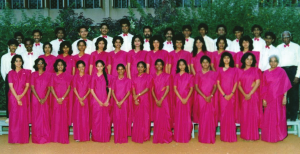
Perhaps the most significant initiative of this decade was the founding of the Praise Singers under the mentorship of Rev. Thomas Gnanamuthu. Rebecca Mahalia Andrew places the development in its historical context: “The Praise Singers started off as the Youth Choir and was one of the first choirs that sang contemporary songs in a fairly conservative church setting — a great introduction of contemporary gospel music to Bangalore.”
For Praveen Prasanna, the significance extended beyond music. The Praise Singers drew many people who were not RTMC members to the evening services, becoming a point of connection between the church and the wider city.
The Fundraising for the New Building
One of the defining efforts of this decade was the fundraising required to rebuild the church. It was a project that demanded participation from the entire congregation. Alex Samuel’s account, found towards the end of this section, documents the dramatic gap between what was needed and what was available. What the congregation did to bridge that gap is remembered, fifty years later, with remarkable specificity.
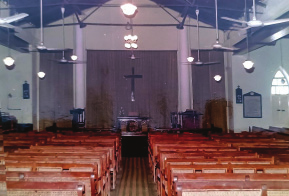
Peter M. Paul, who was part of the youth group at the time, remembers: “I am very happy to have played a small part in the collective effort to raise funds for the construction of our new church.” The youth group collected newspapers from members and sold them, while also performing the musical The Race Is On at different locations. He adds, “I remember that everyone we knew in the church did what they could to raise the needed capital.”
The detail is revealing. Young people collected newspapers and performed a musical around the city to raise money for a new church building. Such stories rarely appear in official records. They capture the response below the committee level — the people who might not have been able to give a month’s salary, but could give a Sunday afternoon, a performance, or a stack of old newspapers. The church was rebuilt by all of them together.
Going Out: The Srinagar Worship Centre
This decade also saw RTMC begin to think beyond its own walls in a specific and significant way. Praveen Prasanna identifies the founding of the Srinagar Worship Centre, through the ministry of Gladson Anchan and Mr. Dattatreya, as the initiative he was most proud of. It was a mission taking root: a church planting another, sending its people out to carry the faith into a part of the city that did not yet have it.
“We were a community. We respected our godly pastors who were our spiritual mentors. They prayed for us and walked with us.”
— Roopa Sundaramony Ravikumar
1985–1995
The City Changes, So Do We
Voices from this decade:
Oniel Samuel • Sheila William Joseph • Grace N Joseph • Viji and Priya • Shirley Aaron • Mercy Sarita Moganti • Felix Jeevaneson • Eva Sukumar • Rachel Shatananda • Ravi David • Benjamin Stephen
A Congregation of 600–700, Inter-generational and Alive
Ravi David, whose memories of this decade are among the most detailed received, paints a picture of a church at something close to its peak: “The congregation might have been around 600–700 members. The congregation was inter-generational. There was a strong emphasis on biblical truth, fellowship, music, and discipleship.”
Sheila William Joseph’s single most striking observation is perhaps the simplest: “Everyone knew everyone.” Grace N Joseph remembers “large attendance and a wonderful array of church activities, with a friendly atmosphere.” Viji and Priya, who describe these as “the best days of our lives,” remember a church that gave young people fellowship, music, structure, and pastoral care that felt personal.
RTMC as a Mother Church: Planting New Congregations
Throughout the responses from this decade, a clear theme emerges: RTMC’s deliberate movement outward. The church was not only serving its own congregation but beginning to plant new congregations across Bangalore.
Benjamin Stephen, whose memories of RTMC span 32 years from 1982 to 2014, identifies this as one of its most significant achievements: “The church-planting initiatives, which have now become established churches, were a tangible expression of RTMC’s commitment to urban mission. RTMC was the mother church, nurturing new church plants that began as small Bible study groups.”
Grace N Joseph confirms the same movement, remembering that RTMC “established churches in various parts of Bangalore to further its evangelistic outreach.” The satellite congregations that would eventually become independent Methodist churches in Indiranagar, Koramangala, and elsewhere were taking root in these years, beginning as home Bible studies before growing into communities of their own.
The Rebuilding of the Church in the Early 1990s
The major practical achievement of this period, noted by Naomi Manorama Joshua and confirmed by Benjamin Stephen, was the rebuilding of the church building. Benjamin remembers it directly: “The whole project of the new building — It was a massive task undertaken and the generosity and enthusiasm of the church was something memorable. My parents modeled to us kids how they saw the church and giving.”
That last detail carries particular weight. The new building is remembered not simply as a construction project, but as a lesson in what the church is: a community that gives together for something larger than any individual. Benjamin Stephen learned what the church meant by watching how his parents responded when it needed them. A church that teaches its values in this way — through what parents model before their children — understands something important about formation.
LR Nagar and the Mission Impulse
The community ministry in Lakshman Rao Nagar — sustained, quiet service to one of Bangalore’s less-seen communities — runs through this decade. Mercy Sarita Moganti recalls, “We looked after the underprivileged in Lakshman Rao Nagar for more than a decade.”
The Missions Weekend is also remembered by Ravi David: “The call to missions was loud and clear.” At a time when Bangalore was becoming more prosperous — and perhaps more distracted — the church sought to live out Jesus’ call: “Truly I tell you, whatever you did for one of the least of these brothers and sisters of mine, you did for me” (Matthew 25:40).
“The whole project of the new building was a massive task. The generosity and enthusiasm of the church was something memorable. My parents modeled for us kids how they saw the church and giving.”
— Benjamin Stephen
1995–2005
Boom Town, Boom Church
Voices from this decade:
Saraswathi Priyadarshini • Rohit Sailas • Aural Shatananda • Hannah D’Brass
A Church at Full Stretch
Saraswathi Priyadarshini’s account of this decade is among the most vivid: “The church was vibrant and full of life. VBS would welcome 300–400 children, the Men’s and Women’s Fellowships were active, the youth ministry was thriving, and every programme was celebrated on a grand scale. Above all, there was a deep sense of family, genuine fellowship, and belonging.”
It was a church full of activity, but the memories are not only about numbers and programmes. Beneath the scale was a strong sense of belonging — the feeling that RTMC was a family even as the city around it was expanding rapidly.
The Musical: The Witness at the 140th Anniversary
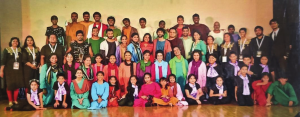
The decade’s most memorable cultural achievement was the staging of the musical The Witness during RTMC’s 140th anniversary celebrations at the Lincoln Auditorium of Baldwin Boys’ School.
Saraswathi Priyadarshini, who directed the production, remembers a cast of more than 100 members: “It was a magnificent production that showcased the incredible God-given talents of our children and congregation.” The production became an act of collective witness — a congregation expressing its faith through art and doing so on a public stage.
Holding the Fort
Aural Shatananda offers a more complex picture of the decade. “A particular passionate crop of hardworking, honest people were being replaced with spiritually weaker leadership. The IT boom was drawing youth away from the churches.”
His description of the church’s response is characteristically direct: “They held the fort.”
There is neither triumphalism nor defeatism in those words. Instead, they describe a church maintaining itself under pressure — keeping its doors open, sustaining its ministries, and continuing to offer the community what it had always offered even as Bangalore and its people were changing.
“VBS would welcome 300–400 children, the Men’s and Women’s Fellowships were active, the youth ministry was thriving. Above all, there was a deep sense of family.”
— Saraswathi Priyadarshini
2005–2015
Mission at Our Doorstep
Voices from this decade:
Sudhir Joglekar • Lipsita Sahu • Devaki Samuel • Dorothy Deena Theodore
Multi-Cultural, Multi-Lingual, Equally Welcomed
Dorothy Deena Theodore’s description of this period captures something important: “Each one knew the other. Vibrant home Bible studies. Youth inter-church activities. Multi-cultural and multi-lingual — all equally accepted and loved.”
By 2005, RTMC’s congregation was genuinely diverse in regional background, mother tongue, and professional trajectory. That diversity was absorbed without fracturing the sense of community. People came from different parts of the country and brought different languages and experiences with them, yet the memories of this period repeatedly return to belonging and acceptance.
Reaching Transgenders, Tribals, and the Marginalised
The MYF of this decade extended its outreach well beyond the church’s immediate community: “MYF reached out to transgenders, orphans, old age homes, and other church youth. Inter-church football and basketball tournaments were conducted. Outreach with tribals — the Jenukurubas.”
The Jenukuruba community are indigenous forest-dwellers from Karnataka and among the state’s marginalised communities. The involvement of a church youth group in outreach to them is one of the initiatives that Dorothy believes deserves wider recognition.
“Multi-cultural and multi-lingual — all equally accepted and loved. Vibrant home Bible studies. Youth inter-church activities.”
— Dorothy Deena Theodore
2015–2025
Pandemic, Persistence & New Beginnings
Voices from this decade:
Kamala Rachel • Linda Catherine • Amritha Sarah Singh • Shilpa Das • Bob Nathanael • Pamela John • Binita George
Going Digital: The Pandemic and What It Taught
The COVID-19 years of 2020–22 forced churches everywhere to find new ways of remaining connected. RTMC did so through digital worship and communication.
Bob Nathanael remembers, “The way it has gone digital, it has ensured to stay in contact with people who are not able to attend church physically for various reasons.” Shilpa Das adds, “We all connected through a shared link to praise the Lord. We all stood together even at difficult times.”
The digital shift was born out of necessity, but it also created a new way for people to remain connected with the church when physical attendance was not possible.
New Energy and Renewal
Against the losses and disruption of the pandemic years, new energy began to emerge. Shilpa Das describes helping with the church’s social media management, creating posters, and practising drama with children during VBS. Amritha Sarah Singh sees a congregation characterised by “a huge group of young adults, lots of youth activities, effective leadership skills recognition, creative engagements and events.”
Binita George offers the most theologically grounded summary of the decade: “Over the years, the church has grown and experienced many changes, as every church does. While the style and structure may have evolved, God’s faithfulness has remained constant. The foundation continues to be the preaching of God’s Word and the desire to point people to Christ. That enduring commitment is what has made RTMC special across every season.”
The Question the Decade Asks
Eva Sukumar, whose perspective spans this and earlier decades, gives the decade its proper challenge: “Are we the Church God wants us to be — salt of the earth, others-centred, with strong biblical teaching and a sense of family?”
It is a question that reaches beyond one decade. It is also the question RTMC carries into the next fifty years.
“We all connected through a shared link to praise the Lord. We all stood together even at difficult times.”
— Shilpa Das
The Long View
What Fifty Years Reveals
Naomi Manorama Joshua, who has been associated with RTMC for five decades, offers one of the most complete views of what has changed and what has held.
“The church has always remained vibrant with different types of members from different parts of our country and the world,” she observes. At the same time, she mourns something specific: the music. The choir is no longer as full, harmonised numbers are fewer, and visiting groups come less often. It is a particular loss, precisely remembered, that points towards a broader question: what does a church lose when the pace of a city makes sustained, in-person commitment harder to maintain?
Benjamin Stephen’s memory of watching his parents give to the building fund — of learning what the church meant by watching how they responded when it needed them — is perhaps the most quietly powerful observation in the collection. A church is transmitted not only through its programmes, but through what adults model before children. RTMC has been carrying that transmission from one generation to another.
The congregation gathering here as the church marks its anniversary has inherited something extraordinary: a community of faith tested across decades of urban transformation, yet still present, still worshipping, still serving, and still asking what it means to follow Christ faithfully in a changing city. That is not a small inheritance. It is the beginning of what comes next.
“One generation shall commend your works to another and shall declare your mighty acts”
Psalm 145:4
This article draws on responses to the Grace & Growth congregation questionnaire, 2025–26, classified by decade as indicated by each respondent. All contributions are published with the permission of the respondent.
Richmond Town Methodist Church • Bangalore • 1875–2025
