How Richmond Town Methodist Church has served the wider city across 150 years
A church that exists only for itself is a church in decline. The Methodist tradition has always insisted otherwise: that faith without works is not faith at all, and that the Gospel is not a private arrangement between a soul and its Saviour but a force that moves outward, into streets and neighbourhoods and the lives of strangers.
Across 150 years, RTMC has taken that insistence seriously. What comes through most clearly when you ask its members how the church has served the wider city is not any single programme but a pattern — a consistent, generation-after-generation instinct to go out rather than draw in.
✞ This and the subsequent two articles draw on congregation responses gathered through the Grace & Growth questionnaire, 2025–26, together with editorial research. Contributions are published with the permission of each respondent.
Richmond Town Methodist Church • Bangalore • 1875–2025
THE CHURCH THAT PLANTED CHURCHES
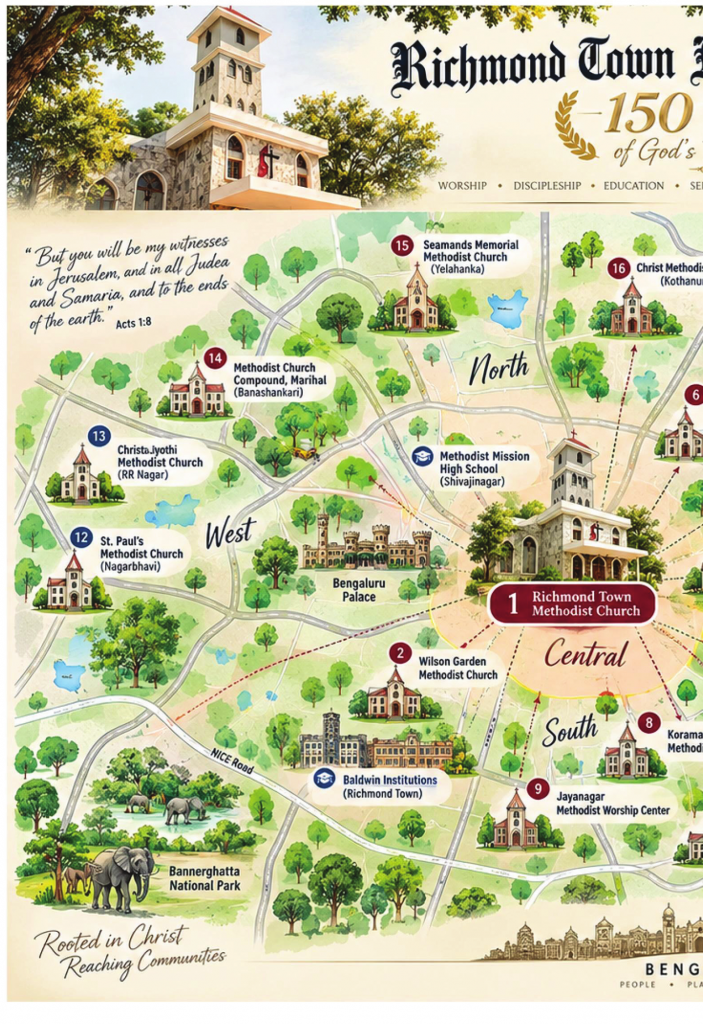
Perhaps the most significant thing RTMC has done for Bangalore is something that, by its very nature, cannot be seen from the original building: it has planted other churches across the city.
Viji, who has been a member since 1980, puts it plainly:
“From RTMC came so many satellite churches in Indiranagar, Koramangala, and other parts of the city. The missional outreach has had such a wide impact.”
— Viji
Grace Veena Bunyan confirms it:
“RTMC planted churches in four different parts of the city, which have now become independent Methodist churches.”
Shirley Aaron, Praveen Prasanna, and Sudhir Joglekar each say the same thing in their own words.
Praveen Prasanna, whose own faith was formed at RTMC before he went on to serve in mission and ministry, notes that the church “birthed other churches in Bangalore, like IMC, and partnered in missions with several organisations including IEM, NLCI, and Dr. Iris Paul from Malkangiri.”
These are not footnotes; they are the primary evidence that a church has understood its calling as something larger than its own Sunday attendance.
THE SCHOOLS: A CENTURY OF CIVIC SERVICE
The most visible expression of RTMC’s service to Bangalore has always been its relationship with the Baldwin schools.
Baldwin Boys’ High School and Baldwin Girls’ High School have, across generations, educated thousands of Bangaloreans from every background. They are Methodist institutions, and RTMC has been their spiritual home.
The Baldwin Opportunity School, established on Convent Road for children with special needs, is a further extension of that same institutional family — a Methodist institution whose roots reach back through Baldwin Girls’ High School to the mission that RTMC has carried from its earliest years.
✞ THE BALDWIN OPPORTUNITY SCHOOL
Grown by God’s Grace — 62 years of caring ministry
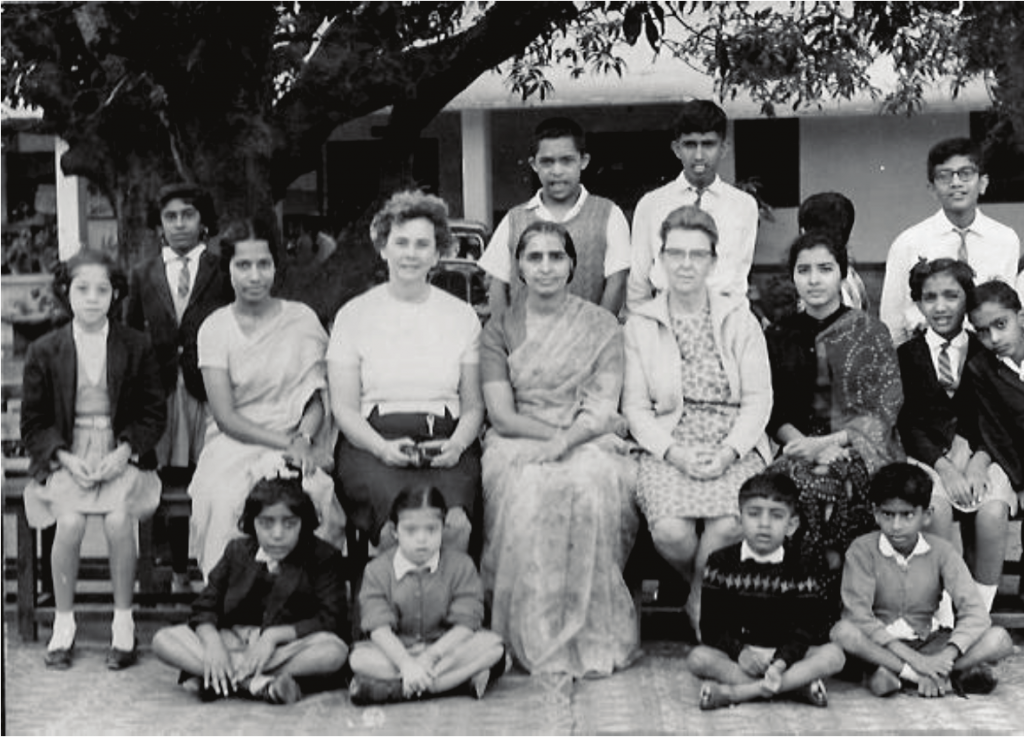
The Baldwin Opportunity School was founded in 1964 by Anna May Tillou, an American Methodist missionary who had previously established a special education school in Chennai. She came to Bangalore with a conviction to serve children who were slow learners, and she began with nothing but faith.
“We were without a room and we were without students. That’s the way we started. We were put out on the edge of one of the verandas, and I was given a blackboard. And that was where the school started.”
From that veranda, she moved her classes into the Sunday school rooms of the Methodist Church, carrying books and hanging up pictures every Monday morning and packing them away each Friday so the rooms would be ready for Sunday school.
In November 1967, the school’s permanent home at No. 3 Rhenius Street was dedicated. In 1972, a property on Convent Road was purchased to establish hostels for boys and girls.
Anna May Tillou continued to follow and care for the school’s growth until she was called home to the Lord in 2016 at the age of 103.
The school today is led by its current Principal, Sajinie Gnanatheeban, who carries the torch with the same conviction: that these children should step out into the real world, face its challenges with confidence, and find their place in it.
Sajinie Gnanatheeban
Principal & Correspondent, Baldwin Opportunity School
No. 3 Rhenius Street, Bangalore • An institution of the Methodist Church in India
Rohit Sailas, who came to the church through his mother’s work at Baldwin Boys’, puts the contribution simply:
“Through the Baldwin institutions, which has produced luminaries over the years.”
The schools brought the church into contact with families who might never otherwise have walked through its doors.
Smita Noronha recalls that the youth carried the work further:
“Youth outreach to prisons, orphanages, and the Baldwin schools were ways for the young people to be exposed to those outside the church and take the love of Jesus to people who might never enter a church.”
Kamala Rachel Kripavathi Noronha notes that in the 1970s:
“Those from other churches flocked here for VBS, the Sunday service, and the Good Friday service.”
The church was, in that era, a hub for the wider Christian community of Richmond Town and beyond.
REACHING THE MARGINS: SLUMS, PRISONS, AND OLD AGE HOMES
The church’s outreach has consistently turned toward those the city tends to forget.
Sunil Gokavi lists the programmes he remembers with quiet pride:
“The LR Nagar school for slum kids, and visits by church groups to old age homes.”
Mercy Sarita Moganti confirms:
“We looked after the underprivileged in Lakshman Rao Nagar for more than a decade.”
Oniel Samuel adds:
“The church has reached out to the poor and needy, the underprivileged too.”
Eva Sukumar recalls “old age home visits, prison ministry, inter-church youth programmes, a youth magazine, and music productions by the youth.”
Suma Emmanuel’s account of the Prison Ministry — monthly visits under the leadership of the late Mr. Sundersingh, singing hymns with inmates, praying with people carrying stories of pain and regret — is among the most vivid in the entire collection.
“I vividly remember one former inmate who, after her release, visited my home seeking help in finding employment. That encounter remains a powerful reminder of the lasting impact of compassionate Christian ministry.”
Kamala Rachel records a simpler act:
“The youth fed the poor.”
Five words, a whole ministry.
THE AFTER-DINNER SERVICE
Not all of the church’s outreach to Bangalore was formal. Some of it was simply the magnetic pull of a community doing something extraordinary in public.
The After-Dinner Song Service — a distinctive RTMC tradition — drew people from across the city and across denominations.
Sunil Gokavi recalls it as an occasion:
“When other churches were invited to participate.”
Rebecca Mahalia Andrew describes the broader musical vision:
“The vision to support a choir that sang contemporary songs for younger audiences as well as songs that appealed to older and more conservative people — a great introduction of contemporary gospel music to Bangalore.”
Praveen Prasanna points specifically to the Praise Singers:
“The starting of a vibrant evening choir under the mentorship of Rev. Thomas Gnanamuthu drew many non-RTMC members to the evening services.”
Music was outreach. Fellowship was outreach.
The willingness to open the door and play well was, in its own way, an act of mission.
SUNDAY SCHOOL, VBS AND THE VERNACULAR CHURCHES
Mercy Sarita Moganti notes something that might otherwise go unrecorded:
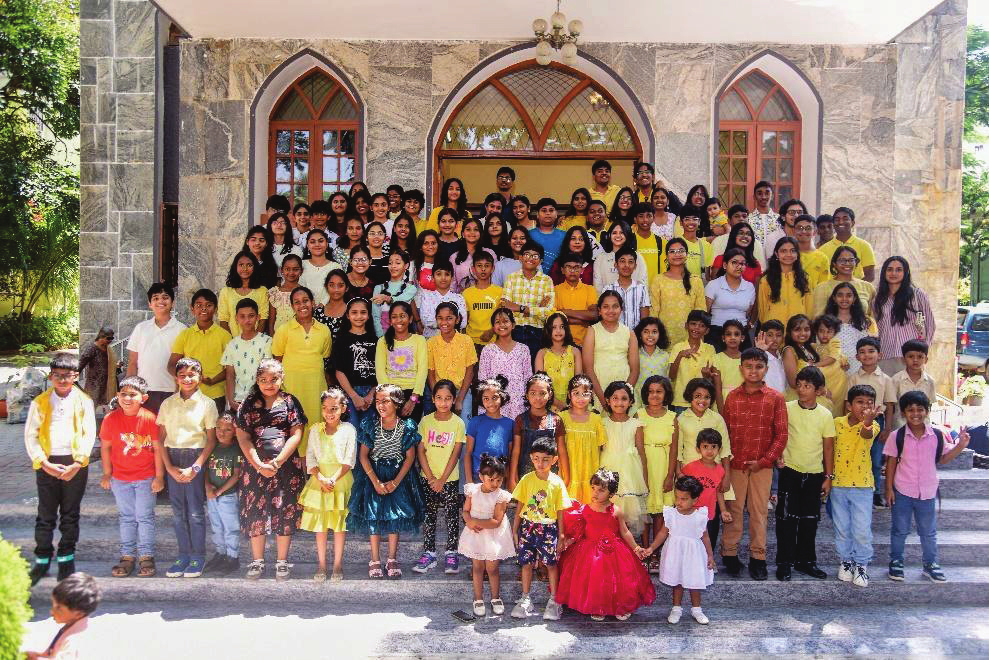
“Lots of kids from vernacular churches came to attend Sunday school and VBS here, which was conducted in English.”
This is the church serving as a resource for the wider Christian community — providing English-medium Christian education to children whose own churches could not offer it.
Lipsita Sahu frames the overall spirit simply:
“RTMC has served the wider city by extending Christ’s love through acts of compassion, supporting the needy, welcoming visitors with warmth, and reaching out to people beyond its own congregation.”
That is not a mission statement drafted by a committee. It is an observation made by someone who arrived as a visitor and found it to be true.
RTMC also conducted classes in regional languages during VBS, besides a class for Special children by Ruth Macwana.
The Sunday School for Special Children, conducted under the guidance and leadership of Dr. Anna Oommen Francis, was the only one of its kind and brought in people from other faiths in large numbers.
Dr. Joseph Shields speaks about the Church Choir and Pastor Arun Andrews taking the Christmas story to IIM Bangalore in 1995 and some years following.
Pamela John mentions outreach by the Choir under the leadership of Danny and Christy, presenting “Love of the Father” at NIMHANS.
“RTMC has served the wider city by extending Christ’s love through acts of compassion, supporting the needy, welcoming visitors with warmth, and reaching out to people beyond its own congregation.”
— Lipsita Sahu
AN OPEN DOOR
Stories of those who came to RTMC as strangers, and did not leave as strangers
The doors of Richmond Town Methodist Church have been open for 150 years. But a door is only as good as what waits behind it — the quality of the welcome, the willingness to receive whoever arrives without requiring them to be anything other than what they are.
When we asked members whether the church had ever been a resource for someone who was not a member, the responses came back quickly and from every direction. Some were their own stories. Some were stories of others. Together they make the same point:
RTMC has rarely distinguished sharply between member and stranger.
DRAWN IN FROM ANOTHER DENOMINATION
Praveen Prasanna’s account is among the most complete:
“We ourselves were drawn in from another denomination, brought to Christ and made into disciple-makers by the holistic ministry of the church during our tenure at RTMC.”
This is the full arc: arrival, welcome, formation, and multiplication.
A stranger becomes a disciple; the disciple makes others.
Roopa Sundaramony Ravikumar recalls a different version of the same story:
“Our youth fellowship was so active. We had young members of the Hudson church who would attend regularly and also served in responsible positions. I remember the Malaki and Manoraj children who were part of us.”
The MYF was, in its best years, not a closed circle but an open one. People from other churches came and were given responsibility. They were trusted. That trust was itself a form of welcome.
Rachel Shatananda adds that the MYF camps were open to young people who were not regular attendees.
The camps went out; the young people came in.
“We ourselves were drawn in from another denomination, brought to Christ and made into disciple-makers by the holistic ministry of the church.”
— Praveen Prasanna
THE BOARDERS WHO FOUND COMFORT
Mercy Sarita Moganti remembers a quiet ministry she witnessed across the years:
“Some of the Baldwin boarders who attended the evening service always told me they found the choir music soothing. Most of them felt homesick, and the hymns we sang, too, were comforting.”
These were not members. They were students living away from their families, in a city that was not yet home, who found their way to an evening service and discovered that the music helped.
No programme brought them. No outreach initiative targeted them.
They simply came, because the door was open and the singing was beautiful, and something in it reached across their homesickness and held them for an hour.
Rohit Sailas puts it directly:
“Every non-Christian who has attended RTMC, like the boarders of Baldwins, has had the opportunity to hear about Christ.”
Opportunity, not coercion. The church offered; people chose.
THE HINDU NEIGHBOUR WHO CAME WILLINGLY
Rebecca Mahalia Andrew nee Jeevaneson recalls:
“I know a few Hindus who were happy to be part of all the events and programmes in church. I know one of them eventually married a Christian. It probably made him open to the faith of other people.”
Oniel Samuel confirms the same pattern from his own memory:
“The church had many non-Christians in the neighbourhood sitting in our evening services and Christmas time gatherings.”
The evening service and the Christmas gathering — two occasions when the church was at its most musically and communally alive — drew people who belonged to no tradition but were curious about what was happening inside.
Pavan Peter recalls that the evening services brought peace and calm to a friend from another faith.
THOSE WHO CAME IN NEED
Kamala Rachel Kripavathi Noronha records a specific act of care:
“A lady with her five-year-old son was helped to be trained for a job when her husband died.”
The church does not give a name, and neither does she. The gift was practical. A widow, a small child, a job that did not yet exist for her — and the church connecting the two.
That is mercy made concrete.
Saraswathi Priyadarshini tells her own version:
“Coming from a Hindu background, I was welcomed into the church with open arms and made to feel like family. Even after I became a single mother, I continued to bring my two sons to RTMC, and I was never judged. Instead, I was surrounded by people who loved me, supported me, encouraged me, and faithfully prayed with me through every season of my life. RTMC became more than a church — it became my home and a living example of Christ’s unconditional love.”
“RTMC became more than a church — it became my home and a living example of Christ’s unconditional love.”
— Saraswathi Priyadarshini
LIPSITA: WELCOMED INTO THE CHOIR
Lipsita Sahu’s account carries its own particular warmth:
“As a visitor, I was warmly welcomed into the choir and was always treated as part of the family. I never felt like an outsider; instead, I experienced genuine love, acceptance, and encouragement.”
She arrived as a visitor and was handed a place in the choir.
The choir did not ask whether she was a member. It asked whether she could sing.
That distinction — so small, so natural — is the difference between a church that opens its doors and a church that opens its life.
THE STREET THAT WATCHED THEM GROW
How Richmond Town has changed around the church — and how the church has remained
There is a particular quality to the experience of walking through a neighbourhood you have known for decades. Some buildings are gone. Some trees are gone. The sounds are different. The faces have changed. And yet something persists — some quality of light, or the angle of a particular road, or the way a certain gate opens — that returns you, briefly, to the place as it was.
Richmond Town has been changing for as long as anyone connected with RTMC can remember. And the church has watched it all.
What follows is an attempt to capture how that neighbourhood has changed around the building — told in the words of the people who were there for the changes.
THE NEIGHBOURHOOD THEY REMEMBER
For those who came to RTMC in the 1960s and 1970s, Richmond Town was a place of a particular, now-vanished character.
Mercy Sarita Moganti describes it with the precision of someone who looked carefully:
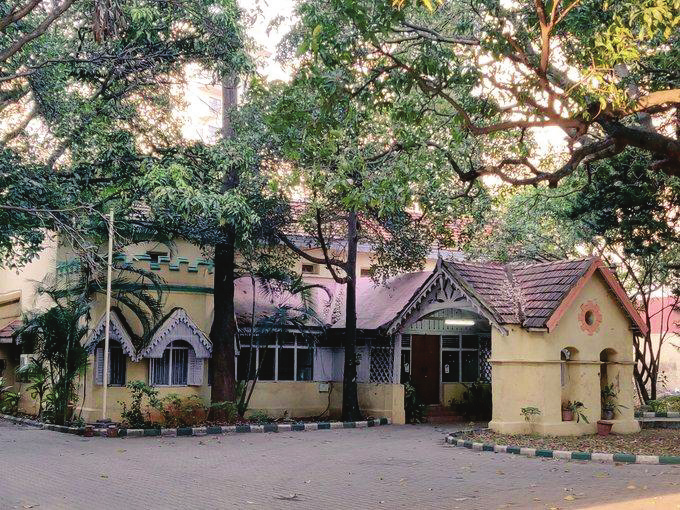
“There were beautiful cottage-style houses in and around the church, with beautiful gardens and a verandah. Most of the people staying here were Anglo-Indian. Now the beauty and sweetness has vanished with huge apartment complexes filled with strangers.”
Clara Nehemiah, who lived on Rose Lane from 1973 to the early 2000s, remembers houses with arches of climber roses yielding almost a hundred flowers in a bunch. She remembers fountains in the lawns in the 1970s.
Richmond Town of the seventies had landmarks like Pachgo’s Auction House. Eminent residents included royalty — the sister of Sri Jayachamarajendra Wodeyar — politicians such as George Fernandes, the Fulinfaws, the Flanagans, and their vintage cars.
It was a quiet, quaint and high-profile residential locality until, in the 1980s, apartment buildings began to creep in and edge out the remnants of colonial lifestyle and architecture.
Shams Stallone, who grew up around Richmond Town, puts it more economically:
“From British open houses to apartments — the old charm has vanished. Oh, except the park opposite the church.”
The park survives.
It is one of the few outdoor public spaces in central Bangalore that has held its ground against the pressure of development.
Mercy too notes it:
“The park in front has stayed the same — and also the kabab place in Johnson Market called Fanoos.”
Some things, against all odds, remain.
Sunil Pichamuthu notes that Myrtle Lane, named after Lady Myrtle, and Wellington Street, named after a Parsee gentleman who ran a cycle company, have still retained their names if not their charm.
“There were beautiful cottage-style houses with gardens and a verandah. Most of the folks staying here were Anglo-Indian. Now the beauty and sweetness has vanished with huge apartment complexes filled with strangers.”
— Mercy Sarita Moganti
THE BUILDINGS THAT ARE GONE
Inside the campus itself, changes have accumulated across the decades.
Roopa Sundaramony Ravikumar names the losses specifically:
“I remember Stephen’s Hall, which was demolished, and the parsonage too.”
Stephen’s Hall carries particular weight in the congregation’s memory — it was where food was cooked and served at countless occasions, where fellowship happened after services, where the social life of the church took place in the gaps between the formal and the sacred.
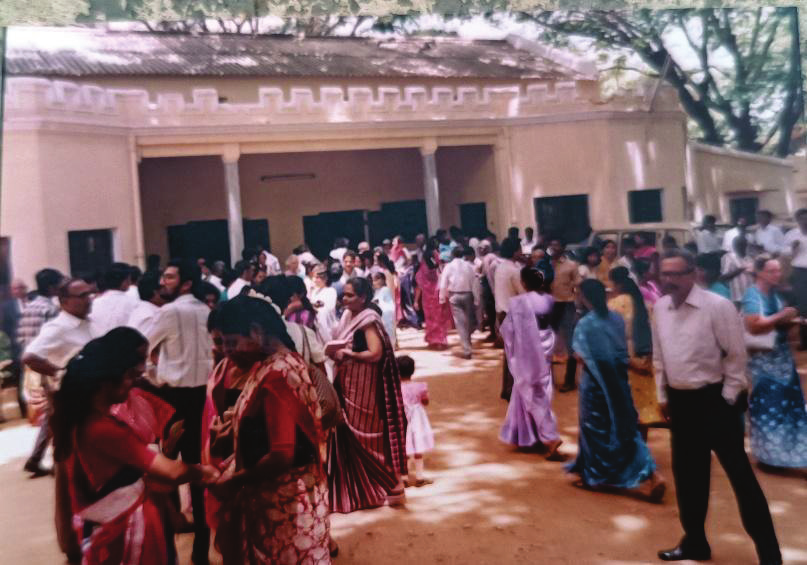
Clara Nehemiah recalls that her mother-in-law, Mrs. Hemalatha Nehemiah, a teacher from Baldwin Boys High School, spoke about how Stephen’s Hall housed a small Kannada congregation that used to meet at a home in Akki Thimmanahalli, between Langford Town and Shantinagar, which they eventually outgrew.
The evangelist Simeon Thatha, as he was known in AT Halli, and his young assistant Jayappa nurtured this congregation until they integrated into the Kannada churches that came up in the vicinity.
Stephen’s Hall served not just RTMC but the people around Richmond Town.
Viji and Priya share that feeling:
“The old church building and Stephen’s Hall still have fond memories.”
Sudhir Joglekar keeps it simple:
“We miss the old building, and the tea fellowship we used to have there.”
The tea. The fellowship. The room where they happened. Gone.
Shams Stallone notes one change that encodes an entire urban history:
“The Sunday school building that’s now where the parking lot is.”
A space of formation converted to accommodate the car. It is a trade-off that churches across Bangalore have had to make, and it tells a story about the city as much as about the church.
“We miss the old building, and the tea fellowship we used to have there.”
— Sudhir Joglekar
THE ACOUSTICS, THE NEW BUILDING, AND WHAT WAS LOST
Kamala Rachel Kripavathi Noronha raises a point that others may have felt but not named:
“The acoustics were compromised with the new building erected instead of the cosy old church.”
This is a real loss. The sound of a church — the way the singing fills a space, the way a spoken word carries from the pulpit, the quality of the silence between the notes — is not incidental to worship.
It is part of it.
A building that is acoustically generous shapes the experience of prayer in ways that a building designed primarily for capacity does not.
Sheila William Joseph puts it plainly:
“Too many constructions around the church.”
The density of development in central Bangalore has pressed in on the campus from every side. The church that once sat in a neighbourhood of gardens and verandahs now stands surrounded by apartment blocks that rise above it.
The sky above Richmond Town Methodist Church is smaller than it used to be.
WHAT HAS NOT CHANGED
And yet.
Against this catalogue of loss, a different note runs steadily through the responses: the insistence that the essential thing has held.
Florence Michael offers the sharpest formulation:
“This church is iconic. This was the only Methodist church we had. Later other MCI churches came up.”
Rohit Sailas, asked how the neighbourhood has changed, responds:
“The church has stood the test of changes, taller buildings all around, but the gem has been unchanged.”
Roopa Sundaramony Ravikumar, having named the demolitions, also notes:
“I appreciate the CEB Hall and the newly constructed toilets. Very nice.”
The congregation does not only mourn. It also notices when things are done well. It pays attention.
Lipsita Sahu speaks from the perspective of someone who arrived more recently:
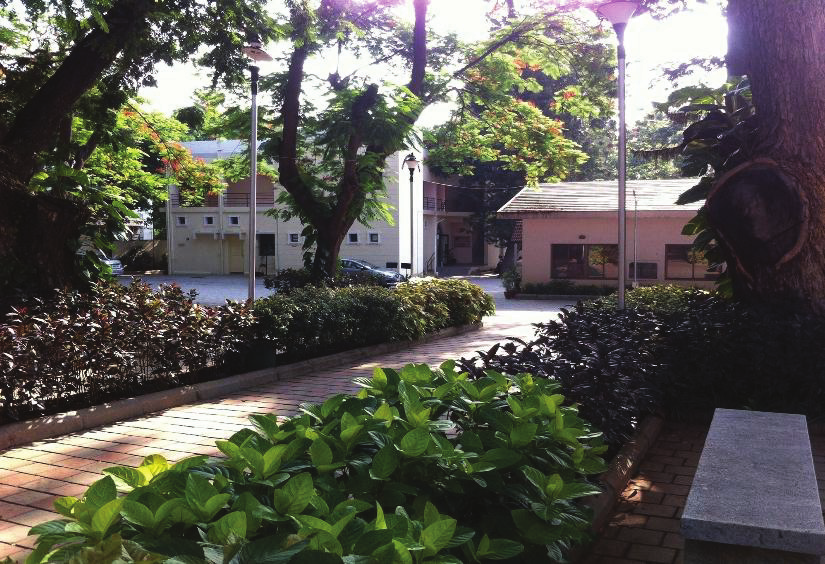
“Richmond Town has changed significantly, with more buildings, traffic, and a faster pace of life. Many familiar landmarks have disappeared, but the church’s welcoming atmosphere, strong faith, and sense of family have remained constant through the years.”
She did not know the old Stephen’s Hall or the cottage-style houses. What she knows is what the church is now.
And what it is now, she says, is unchanged in the things that matter.
“The church has stood the test of changes, taller buildings all around, but the gem has been unchanged.”
— Rohit Sailas
THE QUESTION THE NEIGHBOURHOOD ASKS
Eva Sukumar raises something more challenging than nostalgia.
“More buildings, people more distant — not as giving.”
And then, directly:
“Are we the Church God wants us to be — salt of the earth, others-centred, with strong biblical teaching and a sense of family?”
It is the right question.
Not whether the neighbourhood has changed — it has, irrevocably — but whether the church has kept pace with what those changes demand of it.
A neighbourhood that has become denser, more transient, more diverse, and more anonymous does not need a church that mourns the cottage-style houses.
It needs a church that opens its doors to the strangers in the apartment blocks, learns new names and finds new ways to be the community it has always been, at its best.
Grace N Joseph notes:
“Crowded streets, a dispersed community, a concentration of particular linguistic groups. The old charm has vanished.”
But the old charm was never the point.
The point was the Gospel.
And the Gospel, as John Wesley put it and as Usha Sundaresan repeats across sixty years of faithful distance:
“The best of all is, God is with us.”
“Are we the Church God wants us to be — salt of the earth, others-centred, strong in biblical teaching, a sense of family?”
— Eva Sukumar