
Stories of Life in the Shepherd’s House
Behind every pastor stands a household. The parsonage — the home provided to the pastor and family by the church — has been, across the decades of RTMC’s life, a kind of second sanctuary. Not a sacred space in any formal sense, but a human one: a place where the boundaries between congregation and family dissolved, where people arrived uninvited and were fed, where the ordinary and the extraordinary sat side by side at the same table.
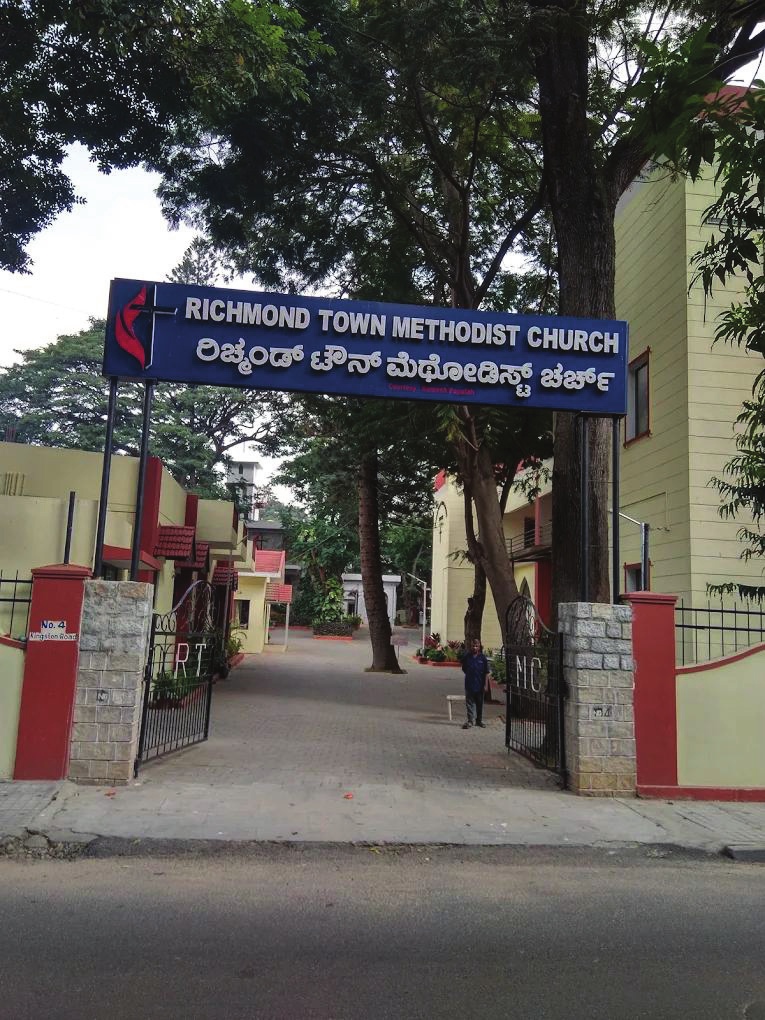
The parsonage at Richmond Town Methodist Church has changed occupants many times over 150 years. Each pastoral family brought its own character to the building. But what runs through the memories of those who knew these households — across different decades, different pastors, different eras of the church’s life — is strikingly consistent: the door was open. Not just unlocked, but genuinely, deliberately, unconditionally open.
“Even though it was a private home, Pastor Moses made it a community space for everyone.”
— Peter M. Paul
An Open Door, A Welcoming Home
Peter M. Paul, who was connected to RTMC from around 1980 to 1995, remembers the parsonage in the years of Rev. Vinay Kumar Moses:
“The doors to the parsonage were always open and welcoming to everyone. I recall many people coming in at all hours even when we were there late after practice for musicals, Easter services, and so on.”
Benjamin Stephen, whose memories span from 1982 to 2014, confirms the same spirit from that era. The parsonage during Moses’s time was accessible, full of conversation, and anchored by what he remembers simply as “Sweety Aunty and Johnny” — the pastor’s wife and son, whose presence made the household what it was.
Rachel Hongal, a former member from 1965 to 1985, contributes a single vivid snapshot that tells the whole story in one sentence:
“I sprinted to the pastor’s residence, knocked like it was an emergency — it was — and ran back clutching a box of baking soda like treasure.”
No context is given, and none is needed. A person in the middle of some domestic crisis ran to the parsonage because they knew, without question, that whoever answered the door would help.
A Home in Times of Need
The most personal account we have received of what the parsonage meant to those who needed it comes from Pushpa Kumar. Her story says something about the parsonage that no other account quite reaches: not simply that the door was open, but that it remained open in the hardest of seasons.
Pushpa Kumar • Member, RTMC
The Shepherd’s house — the parsonage — was always full of people. Congregation members, little infants carried by their mothers, children, youth, men and women young and old, found there just after church: helping ourselves, gate-crashing at the dining table, sitting wherever we could find a place, including the kitchen slab, and occupying every room except the pastor’s bedroom. It was that kind of home.
I heard from my husband Francis that he got dressed in the parsonage for our wedding and walked into church from there. During my first pregnancy, when Francis was travelling for work, the pastor’s wife invited me to stay for lunch and to rest. I can say it was my second home. So safe, so secure, so full of love.
In my second pregnancy, we encountered a stillborn child very close to the ninth month. On the doctor’s advice, I carried the dead fetus for seventeen days. During that time, my experience with RTMC was extraordinary. Caring pastors and their spouses. Congregation members visiting our home regularly — spending time with us, praying, encouraging, taking us out for rides and to different places, sharing our pain. So many people who went the extra mile for us, which we cannot forget.
Pastor Arun Andrews was getting married during this period, yet he never missed visiting and praying with me — travelling twenty kilometres each way. On the day before his wedding he came and prayed with us. The next day I was hospitalized, and the lifeless child was delivered safely.
My family and I will never forget the love and care we received at RTMC — the shepherds and the congregation standing with us in our worst times and our best. God’s grace continues, and we will cherish what we received and pass it on to our children, and to their children, and to theirs.
Memories from the Parsonage
Peter M. Paul • Member c. 1980–1995
“The doors to the parsonage were always open and welcoming to everyone. I recall many people coming in at all hours even when we were there late after practice for musicals and Easter services. Even though it was a private home, Pastor Moses made it a community space for everyone.”
Benjamin Stephen • Member 1982–2014
“The parsonage was always accessible and full of conversation during the time of Pastor Vinay Kumar Moses — Sweety Aunty and Johnny always there, always welcoming.”
Rachel Hongal • Member 1965–1985
“I sprinted to the pastor’s residence, knocked like it was an emergency — it was — and ran back clutching a box of baking soda like treasure.”
Stories That Continue
The pages that follow contain three other longer accounts of parsonage life: from the Moses family, recalling life at the parsonage over 40 years ago; from Rupen Paul, who grew up in the parsonage as a pastor’s son and has a particular story to tell about a frozen laptop and a boy who got lost; and from Sangeetha Samson, daughter of Rev. C. A. Benjamin, who arrived anxious about whether she would ever feel at home and left with a life partner.
Together, they tell the story of a building that was never only a building — and of a series of pastoral families who understood, instinctively and without exception, that the home they lived in on the church’s compound was not theirs alone.
A Home Shared by Generations
The parsonage was a place where:
Families gathered — congregation members, children, youth, and visitors found a welcome there.
Doors remained open — people could arrive with ordinary needs, unexpected problems, or simply a desire for fellowship.
Faith became tangible — through prayer, encouragement, hospitality, and presence in difficult times.
Memories were made — weddings, rehearsals, meals, conversations, celebrations, and everyday moments became part of the church’s shared story.
Care extended beyond the church building — pastoral families and congregation members stood beside one another through both joyful and painful seasons.
The story of the RTMC parsonage is ultimately a story of people — pastors and their families, congregation members, children, friends, and visitors — who opened their lives and their home to one another.
The parsonage was never simply a home. It was the church with the front door open.
