
✞ KINGDOM OUTREACH
Forty years of medical care, education, and worship in one of Bangalore’s most vulnerable communities
Dr. J David & Dr. Thomas Paul • Members, Methodist Men’s Fellowship, RTMC
🌧️ When the Rains Came
In 1974, heavy monsoon rains inundated a slum on the eastern edge of the city — a settlement then known as the Koramangala slum, situated behind the National Dairy Research Institute off Hosur Road.
Its inhabitants were largely labourers from North Karnataka and Tamil Nadu, living in small huts made of bamboo poles and palm leaves.
When the storm water rose, they were forced out.
What happened next was not planned by any committee. It was the response of a congregation.
The Methodist Men of RTMC, under the leadership of Rev. Theodore Williams, visited the area immediately. Clothing, blankets, and food were collected and distributed.
When the families returned to rebuild their huts, a second crisis followed: an epidemic of gastroenteritis and respiratory infections, with children the worst affected.
Dr. Thomas Gnanamuthu, accompanied by members of the Methodist Men’s Fellowship, began providing medical aid by bicycle — the roads were too poor for any other approach.
The bicycle became the first vehicle of a ministry that would continue for four decades.
That bicycle-borne medical response was the beginning of what would become, across the next four decades, one of RTMC’s most significant acts of sustained community service.
🏠 Building Something Permanent
By 1982, the medical work had become more organised.
Dr. Gnanamuthu, with the help of friends in the United States, raised funds to purchase a Matador van for the Methodist Men in 1983.
Alongside the clinic, a parallel work was taking root.
Rev. Theodore Williams had deputed Mr. Elizah Devasunderam to do evangelistic work in the community. A thatched hut on 23rd Street was rented as both his home and a place of education.
He began teaching children to read and write, quietly presenting the Gospel.
Dr. Gnanamuthu started conducting Sunday worship services in Tamil, gathering initially under a temporary tarpaulin shelter.
The hut on 23rd Street became, simultaneously:
A medical clinic.
A classroom.
A place of worship.
“A modest thatched room opened its doors to thirteen children in 1985. Parents, seeing the difference, began sending their children in greater numbers.”
— Dr. Thomas Paul
🔥 Fire, Flood, and Faithful Response
The community was not spared further hardship.
In 1981, a large fire accidentally destroyed half the slum area — thatched huts reduced to ashes.
Food and shelter were provided again.
Rev. Vinay Kumar Moses opened Stephen’s Hall to accommodate the displaced families.
Sunday services continued without interruption.
In 1984, fire struck again, burning down the remaining half of the settlement. It stopped just short of the church building.
The Methodist Men turned to Compassion International and CASA — Christian Aid for Social Action, who provided blankets, cooking utensils, and steel trunks for the affected families.
By this point, the congregation at LR Nagar had grown sufficiently to require a permanent building.
Through the sustained effort of the Methodist Men, a small plot was purchased on the main road from the municipal corporation.
A church building was constructed and dedicated by Bishop Elia Peter on 25th December 1984 — Christmas Day.
From a community displaced by fire came a permanent place of worship.
That congregation has since grown into the vibrant Ebenezer Methodist Church, now pastored by Rev. K.K. David.
📚 The School: From Twelve Children to 850
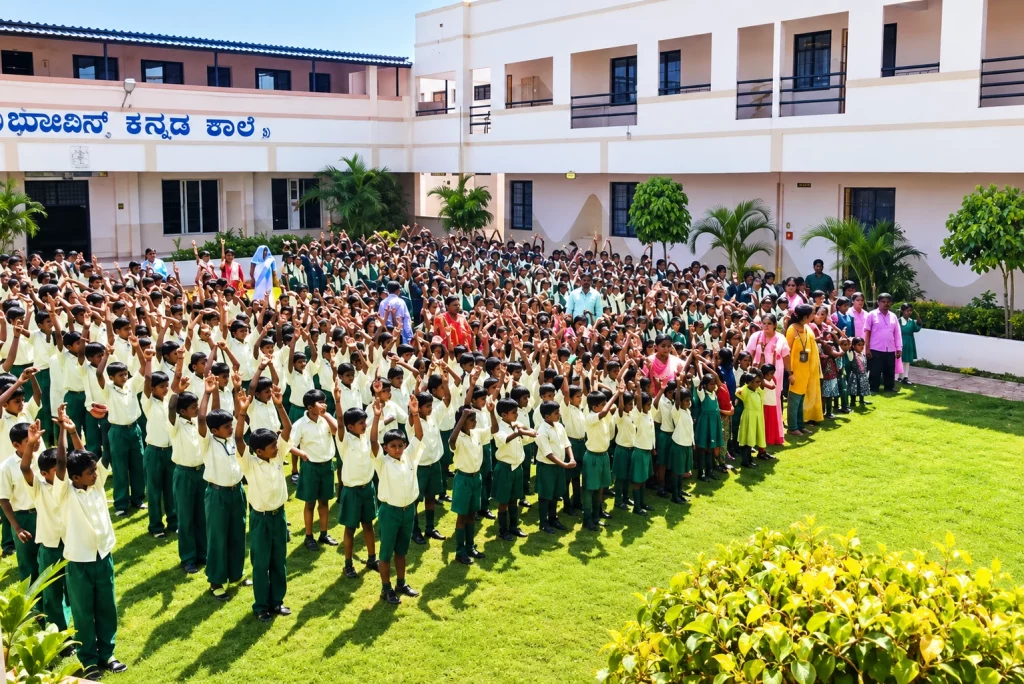
In 1985, a school was started with twelve children and one teacher in a modest thatched room.
The intention was straightforward: to give the children of the slum the education their circumstances denied them, alongside the holistic care that the medical and evangelistic work had already established.
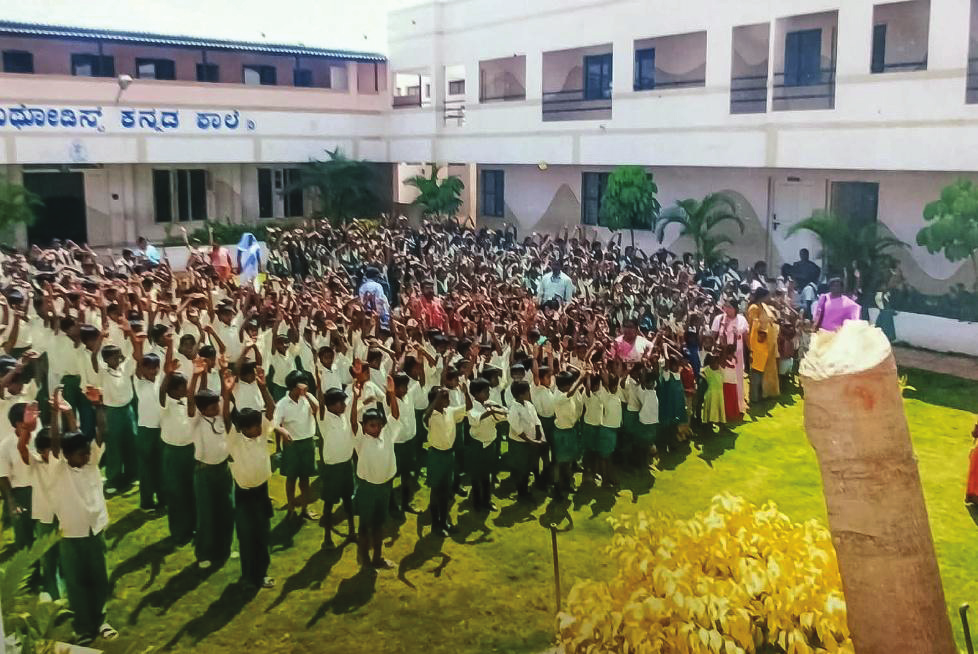
Ms. Shashikala Natarajan, a dedicated RTMC member, took on the school’s development with remarkable commitment.
She was later recognised with State and National awards — an honour that speaks to the quality of what was being built in LR Nagar.
Parents saw the difference the school made and sent their children in increasing numbers.
12 Children → 850 Students
By 2009, enrollment had reached 850.
Dr. Thomas Paul was among those moved by the school’s work:
“I was deeply moved by this outreach and had the privilege of supporting the school’s growth. We invited two groups of students from Holland to visit the slum, who then raised funds that were matched by the Dutch government, enabling the construction of good school buildings.”
The school had attracted international attention and funding.
It had become something neither its founders nor its funders could have fully anticipated when twelve children sat down in a thatched room in 1985.
🕰️ Four Decades of the LR Nagar Story
| YEAR | MILESTONE |
|---|---|
| 1974 | Monsoon flooding displaces the slum community. Methodist Men begin relief work under Rev. Theodore Williams. |
| 1982 | Medical work becomes organised. Dr. Gnanamuthu coordinates the clinic at 23rd Street, LR Nagar. |
| 1983 | A Matador van is purchased for the Methodist Men, enabling regular mobile medical outreach. |
| 1984 | Church building dedicated by Bishop Elia Peter on Christmas Day. Ebenezer Methodist Church is born. |
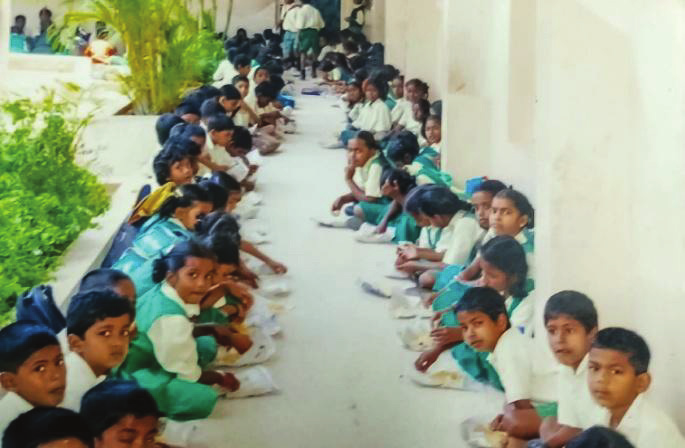
| 1985 | A school is founded with 12 children and 1 teacher. Compassion International provides meals, books, and uniforms. |
| 2009 | School enrollment reaches 850 children. Dutch student groups help fund new school buildings. |
| 2017 | School closes. Peak enrollment had been 850 in 2009; enrollment had declined to approximately 350 by this point. |
🤝 Those Who Made It Possible
No account of the LR Nagar project would be complete without naming the men who gave it decades of faithful service.
Dr. David’s record includes a roll-call of the Methodist Men who are no longer with us:
Mr. J.C. Paulose
Colonel Abraham
Mr. L. Sundaram
Squadron Leader Sigamony
Mr. Wilfred Azariah
Mr. Moses Rajendran
…and others.
They served without recognition and without stopping.
They were the practical expression of what the Gospel asked of the congregation.
👨⚕️ Dr. Thomas Gnanamuthu — A Ministry of Wholeness
Dr. Thomas Gnanamuthu was appointed Director of the LR Nagar Ministry, coordinating the medical, educational, and evangelistic work under a single vision.
His name appears at every turning point of this story:
Bicycling to the slum in 1974.
Raising funds for the van in 1983.
Leading Sunday worship in Tamil under a tarpaulin.
The LR Nagar project was, in many ways, the fullest expression of the same gifts and convictions he brought to the Praise Singers and to his counselling work:
The belief that wholeness — physical, spiritual, and intellectual — was what the Gospel was actually about.
🕊️ POSTscript — A PROJECT CONCLUDED
The Work Ended. The Story Remains.
Sadly, the LR Nagar Slum Project saw a steady decline in the number of children enrolled after its peak of 850 in 2009.
By 2017, enrollment had fallen to approximately 350.
Efforts were made within RTMC to revive and sustain the school, and some positive steps were taken. But the decision to close the school was ultimately taken in 2017 by the then Bishop N.L. Karkare.
The project site and school premises were subsequently handed over to another organisation.
The closure was felt keenly by those who had given decades of service to the community.
The work that began with bicycles and a tarpaulin shelter in 1974 had, in forty years, educated thousands of children and built a congregation.
That record stands, whatever followed — Grace operating beyond human efforts.
