
✞ THE THRESHOLD
A Light in the Pensioners’ Colony
The early years of Richmond Town Methodist Church — the neighbourhood, the people, and the impulse that started it all
By Sunil Pichamuthu
Before Richmond Town had a name, it had a population. In the years before the neighbourhood acquired its identity in the late 1860s, the area was home to a small colony of pensioned soldiers — largely Eurasian and Irish, men who had served and retired, living modestly on the southern fringe of the cantonment. It was, by the standards of colonial Bangalore, a quiet and somewhat marginal place.
Colonel Haines, working under Lord Bowring, took an active interest in the welfare of this community. The name Richmond Town is said to derive from either Garrison Surgeon Richmond or a Staff Officer of the same name — a small act of commemoration for the people who shaped the neighbourhood before the church arrived to shape it further.
The Spark: Wesley, Taylor, and a Fire That Travelled
The theological ancestry of Richmond Town Methodist Church begins, as Methodist history always does, with John Wesley — the English clergyman who survived a childhood fire and went on to found a movement that would eventually circle the globe. From Wesley’s Methodism came the Wesleyan Methodist tradition, which took a firm stand against slavery and remained close to its Anglican roots.
Several decades later, the Taylor family of the United States adopted Methodism. Their son William was a young man when he heard an African American narrate the testimony of a coal miner — a small act of witness that caught fire in him and sent him across continents. He preached in California during the Gold Rush, in South Africa, in South America, and eventually, in 1870, in India.
When Taylor reached Madras, a recently converted lawyer named Philip Gordon brought him to Bangalore. Taylor conducted a meeting at Clarendon Hall on Ulsoor Road, the large house of Judge Lacey — three hundred people attended, of whom one hundred and forty became converts. The momentum was immediate and unmistakable.
“Three hundred people attended that first meeting. One hundred and forty became converts. The momentum was unmistakable.”
— Sunil Pichamuthu, on William Taylor’s first Bangalore meeting, 1874
The Plot on Kingston Road: 1874–1877
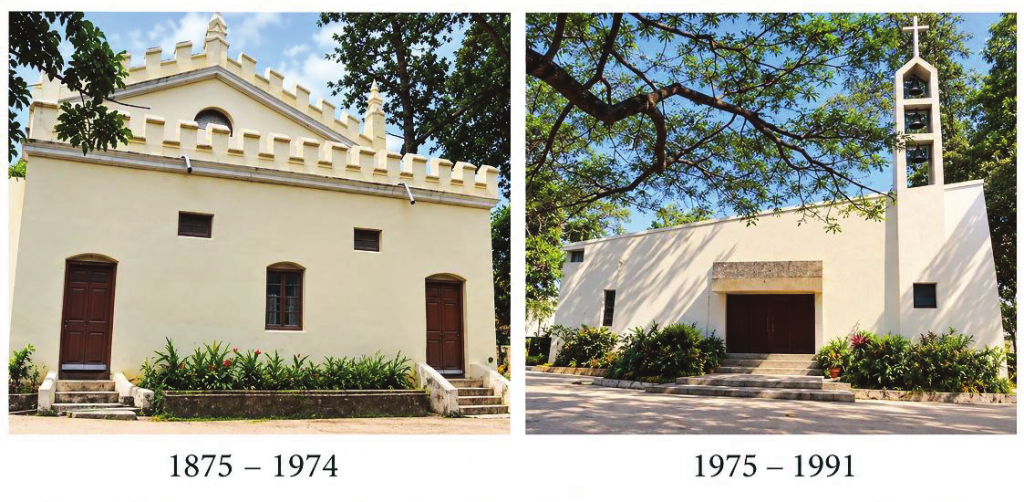
Taylor saw a clear need to serve the Eurasian communities of St. John’s Hill and Richmond Town. He authorised the purchase of two plots of land in 1874: one on St. John’s Hill, where Memorial Church would later stand, and one on Kingston Road in Richmond Town, purchased by Philip Gordon, where Richmond Town Methodist Church stands today. The ground was acquired before the building existed. The community preceded the institution.
The first pastor appointed to the new congregation was Rev. James Shaw, who came from Bombay and had to manage every aspect of establishing the church from the ground up. While the chapel was being built, the congregation gathered at Thornlie Bank on Richmond Road. In November 1877, the St. John’s Circuit and the Richmond Town Circuit were formally separated, and the Irish Rev. John E. Robinson was appointed to Richmond Town.
1874: William Taylor authorises purchase of the Kingston Road plot
1874–1877: Congregation meets at Thornlie Bank, Richmond Road, while the chapel is built
1877: Richmond Town Circuit formally separated from St. John’s Circuit
Rev. John E. Robinson: Appointed as first dedicated pastor of RTMC
Education, Youth, and the Community Around the Church
As the congregation grew, so did the neighbourhood around it. The younger population of Richmond Town was increasing, and with it came the need for education. Rev. Robinson took a deep interest in schooling and worked with the Oldhams to establish a school in their home on Alexandra Street.
Rev. William Fitzjames Oldham had a remarkable background: born to an Irish Catholic Army officer, he had worked as a master at Bishop Cotton’s School before serving as a surveyor in the Trigonometrical Survey of India. The school he helped found moved to rented buildings on Hosur Road and eventually, with the assistance of a benefactor named Baldwin, purchased the buildings where Baldwin School now stands.
As the children of the congregation became young people, the church turned its attention to their spiritual formation. Rev. Karl E. Anderson was instrumental in building up the Epworth League — the forerunner of what would become the Methodist Youth Fellowship — at Richmond Town. The church was thinking, from its earliest years, in terms of generations.
The physical building kept pace with the spiritual growth. Foundation stones for two new wings were laid in 1906: one by Bishop J.E. Robinson on 16th January, inscribed ‘For God and Man’ (1 Peter 2:6), and one by Bishop W.F. Oldham on 6th December, inscribed ‘For Christ and the Children’ — the latter wing built specifically to house the growing Sunday school. Both additions were funded entirely by local contributions.
WINSLOW — TO INSERT IMAGE NO. 9, CHURCH BUILDINGS, FROM THE SHORTLISTED PICTURE FOLDER
The People Who Followed: A Community in Miniature
What is striking about the early decades of Richmond Town Methodist Church is the variety of people who served it and were shaped by it. Each brought something specific to the neighbourhood.
Rev. C.F. Lipp, who served after 1913, took an active role in the Bangalore Temperance Association, which established the Blighty Tea Rooms in the Tract & Book Society Building on St. Mark’s Road. The Tea Rooms served non-intoxicating beverages to the local population at a time when alcoholism in the cantonment was a genuine social problem. The church was not merely preaching sobriety; it was providing an alternative.
Rev. Earl A. Seamands was an engineer before he entered ministry, and he brought that practical formation to his work at Richmond Town. He established the Methodist Trades Institute, which taught cabinet-making, carpentry, motor repair, ironwork, and modern agricultural methods to the local community. He went on to oversee the construction of nearly two hundred churches and a similar number of parsonages across the region.
Miss Grace Stephens — sister of the engineer J.H. Stephens who planned Fraser Town — was among the women who served the church and the wider community through the Women Foreign Mission and Baldwin Girls School. Her legacy in this magazine is more concrete: she left a substantial bequest to RTMC which was used to build Stephen’s Hall, the building that anchored the church’s social and fellowship life for decades.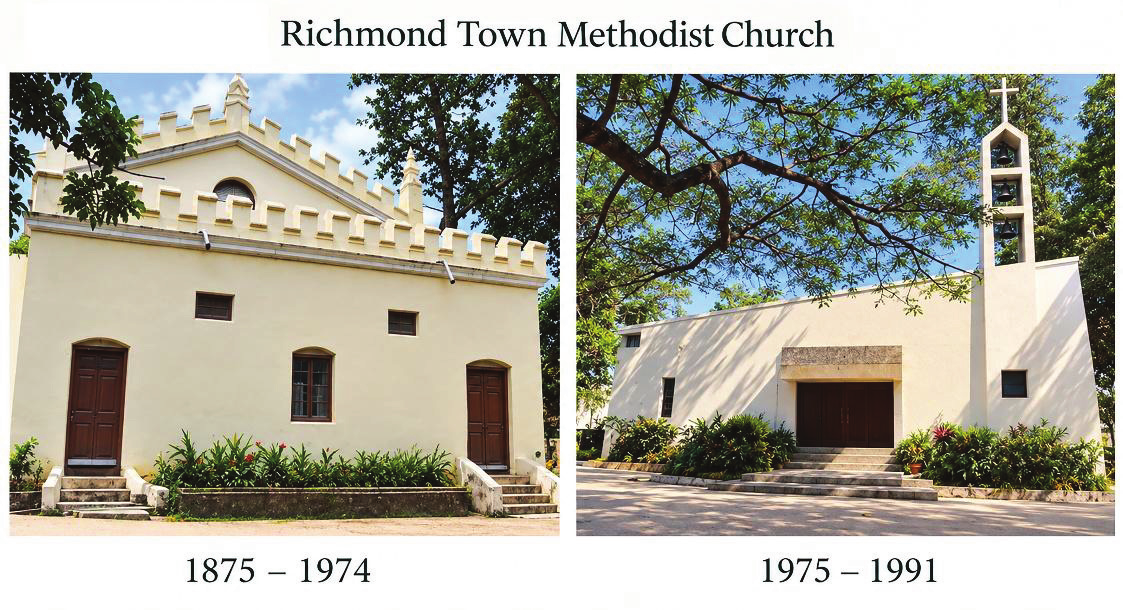
“The ground was acquired before the building existed. The community preceded the institution.”
— Sunil Pichamuthu
A pensioners’ colony on the edge of the cantonment. A converted lawyer who brought an American evangelist to Bangalore. A plot of land purchased before the congregation had anywhere permanent to meet. A school that grew from one family’s home into an institution that has educated generations. A trades institute. A temperance tea room. Two wings added to a building that seemed always to need more space than it had.
These are the early chapters of Richmond Town Methodist Church. They are not grand in the way that institutional histories sometimes try to be. They are, instead, consistently human: a community of people, varied in background and profession, who believed that the Gospel had practical consequences and that those consequences should be visible in the neighbourhood around them.
Sunil Pichamuthu
Member, Richmond Town Methodist Church
